SPOILER WARNING: This article contains massive, detailed spoilers for the entire story of Red Dead Redemption 2, including the main story’s conclusion and the epilogue. If you have not finished the game, we do recommend you to play the game and complete the story mode first.
Red Redemption 2 is a story of heroism and violence. In the game, Arthur Morgan can become a selfish villain or a selfless hero who sacrifice his life for greater good. It is a tragic tale of life either way and once again show the human capability for change.
Arthur’s story culminates in one of the most complex and powerful finales in gaming history, a conclusion shaped by choice, morality and sacrifice. That’s why a comprehensive guide for the RDR2 endings is so essential. It helps unpack the layers of meaning behind Arthur’s final moments and the sprawling epilogue that follows.
We will break down the specific choices that seal your destiny and analyze each of the four possible fates for Arthur. The RDR2 Ending Explained article explores the rich symbolism woven into his death and dissect the narrative purpose of John Marston’s epilogue.
By the end, you will have a complete understanding of not just what happens but why it happens and what it all means for the tragic saga of the Van der Linde gang.
You might also like this: A Full RDR2 Arthur Morgan Character Analysis
Table of Contents
Red Redemption 2 Endings: The Mechanics of Fate
The genius part of RDR2 conclusion is that the fate Arthur is pre-determined and you cannot prevent him from dying but the place and the way he die is totally in player’s hand. The game achieves this by intertwining two key systems: one single, monumental choice and one persistent moral compass that has been tracking you all along.
The Critical Choice in RDR2 Ending: “Help John” vs. “Go Back for the Money”
The final mission of Chapter 6, “Red Dead Redemption,” is the narrative’s ultimate fork in the road. The gang has completely imploded. Betrayal and paranoia have shattered your family.
After a chaotic escape from the Pinkertons, a dying Arthur Morgan is faced with a definitive choice that will lock him into one of two paths. John mentions the gang’s money stash, the very treasure that drove Dutch to madness, is still back at the camp. You must decide:
- Help John get to his family.
- Go back for the money.
This choice doesn’t determine if Arthur lives or dies. In fact, his tuberculosis and the events of the story have already sealed that fate. Instead, this decision dictates the entire context of his final moments, where and how he will die, who he will fight and what his last stand will be for. It is a choice between selfless heroism and the last breathe as a low-class, degenerate outlaw.
RDR2 Endings and Moral Compass: The Overarching Influence of the Honor System
The core of that moral choice is Honor System. Far more than just a simple good/bad meter, Honor acts as a thematic filter for the entire back half of the game. Its influence is felt everywhere from the way characters speak to you to the very color palette of certain scenes.
A high-Honor Arthur faces his diagnosis with a quiet determination to do good with the time he has left while a low-Honor Arthur reacts with bitterness.
In the final mission, your accumulated Honor level becomes the final modifier. Once you’ve chosen to either help John or go for the money, your Honor level will specify RDR2 Endings. This two tiered system is what creates the four distinct and emotionally varied endings to Arthur Morgan’s story.
RDR2 Endings Explained: Arthur vs Fate!
The combination of your final choice and your overall Honor level produces four possible endings for Arthur. They range from a peaceful, redemptive passing to a brutal, nihilistic execution.
Good Ending RDR2 : High Honor & Helping John
This is widely considered the “true” or “best” ending by the community, as it provides the most satisfying and emotionally resonant conclusion to Arthur’s redemption arc. After choosing to help John, Arthur fights his way up a mountainside and holds off the Pinkertons to buy John time. he can not go on and he gives John his hat and satchel. By doing so, Arthur urges him to go to his family and not look back.
Micah ambushes him and starts a brutal fistfight with Arthur on the clifftop. Dutch intervenes, and Arthur, with his last breath, pleads with his former mentor, “I gave you all I had… I did.” Torn and broken, Dutch walks away. Left alone, Arthur crawls to the edge of the cliff and dies peacefully, watching the sunrise as he finally succumbs to his illness and injuries. It is a tragic but beautiful end which symbolizes peace and purpose in the final moments.
The Sad Ending RDR2: Low Honor & Helping John
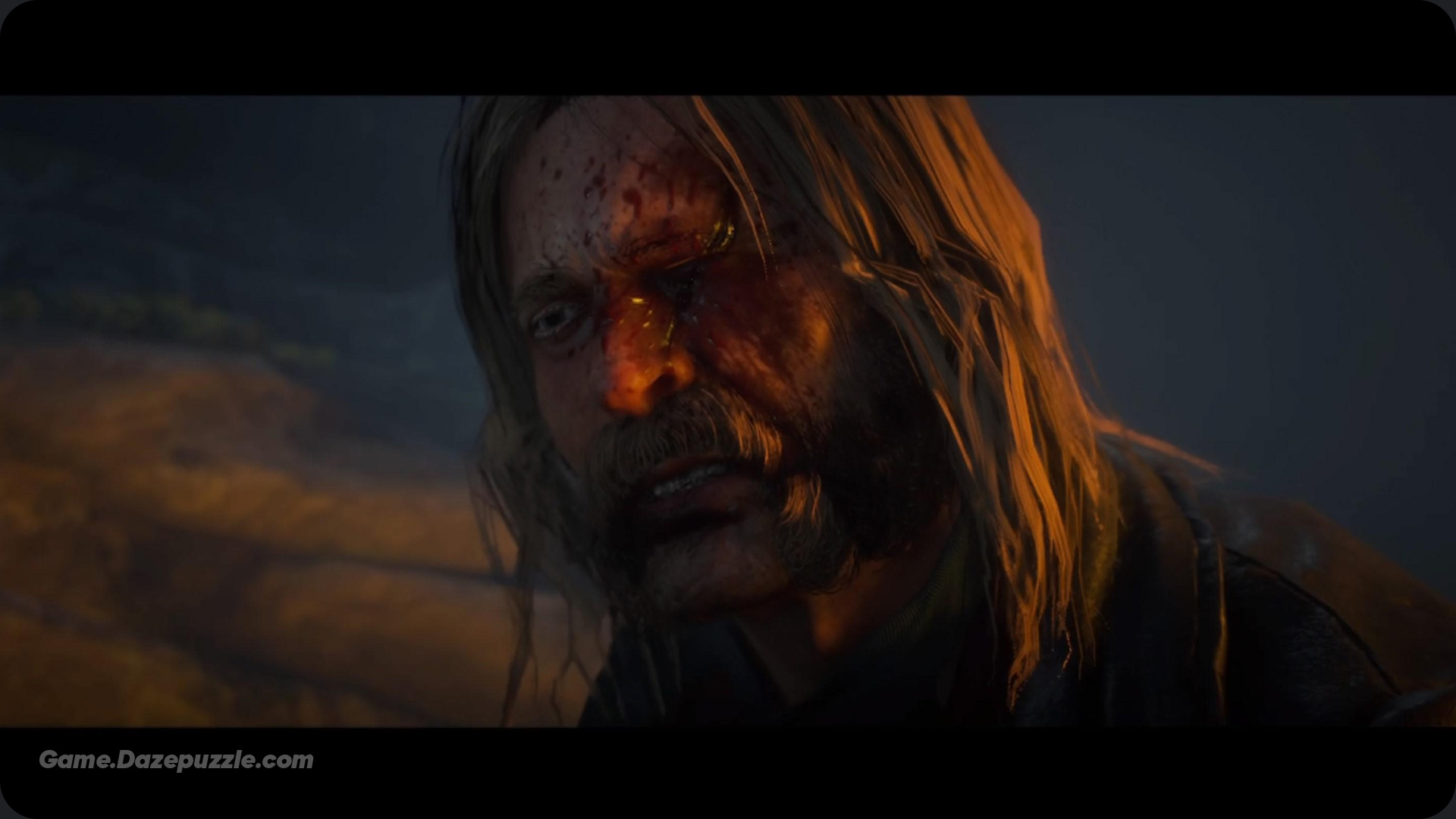
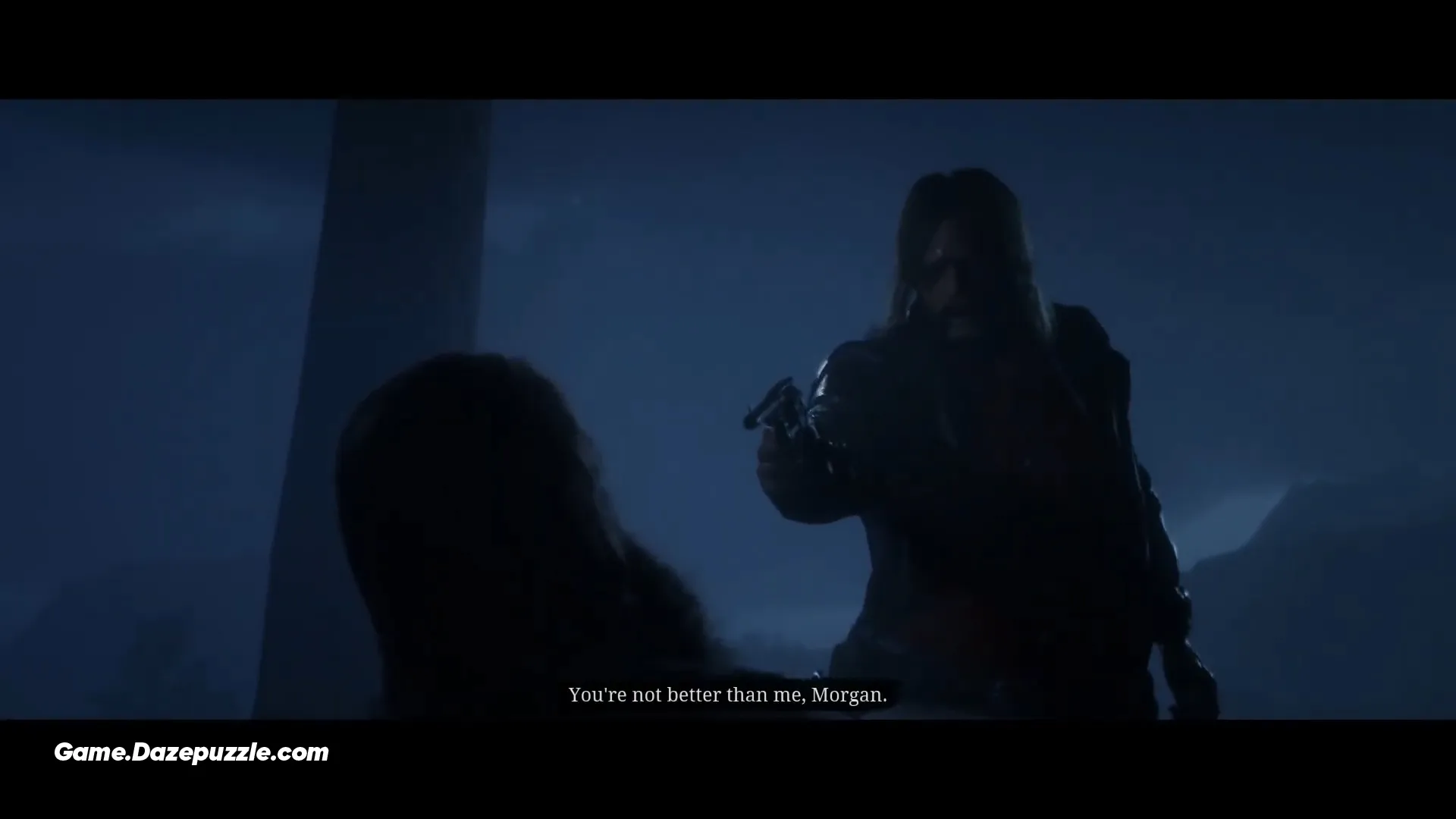
This path follows the same setup but culminates in a far more vicious and bleak finale. The fight with Micah and the intervention by Dutch play out similarly but Arthur’s final words are filled with venom admitting that both he and Micah are terrible people.
After Dutch leaves, an enraged Micah scoffs at Arthur’s last minute attempt at goodness. In cold blood, he just shoots Arthur in the head and leave him to die. This brutal Ending just shows that how life is cruel. At the end, there was no redemption for Arthur.
The Hollow Ending RDR2: High Honor & Going for the Money
This ending feels thematically conflicted and weird for many players. A high-Honor Arthur choosing money over his friend’s life can seem unlikely and even impossible.
In this scenario, Arthur returns to the burning camp and finds the money in the cave where the gang stashed it. He is ambushed by Micah and the two engage in a vicious knife fight. Dutch once again intervenes and leaves.
Micah is wounded and also departs, leaving Arthur alone in the darkness of the cave. He dies there because of his illness and wounds, surrounded by the very money that destroyed his family. It’s a lonely, hollow end which shows that even a man with good intentions can be undone by the lure of the past.
The Bad Ending RDR2: Low Honor & Going for the Money
This is, without question, the darkest and most nihilistic fate for Arthur Morgan. After choosing the money, the knife fight with Micah in the cave is savage. When Dutch leaves, a weakened Arthur crawls for a dropped revolver but Micah stomps on his hand.
With Arthur helpless, Micah turns and stabs him in the back. Arthur is mortally wounded and eventually dies. This ending is devoid of honor, peace, or redemption. As of two previous sections, there is no place for Arthur’s redemption in this ending too.
RDR2 Endings Explained: The Deep Symbolism
Rockstar reinforced RDR2 endings with powerful, recurring symbolism that gives your choices even greater weight. These elements make Arthur’s moral state a tangible presence in the world.
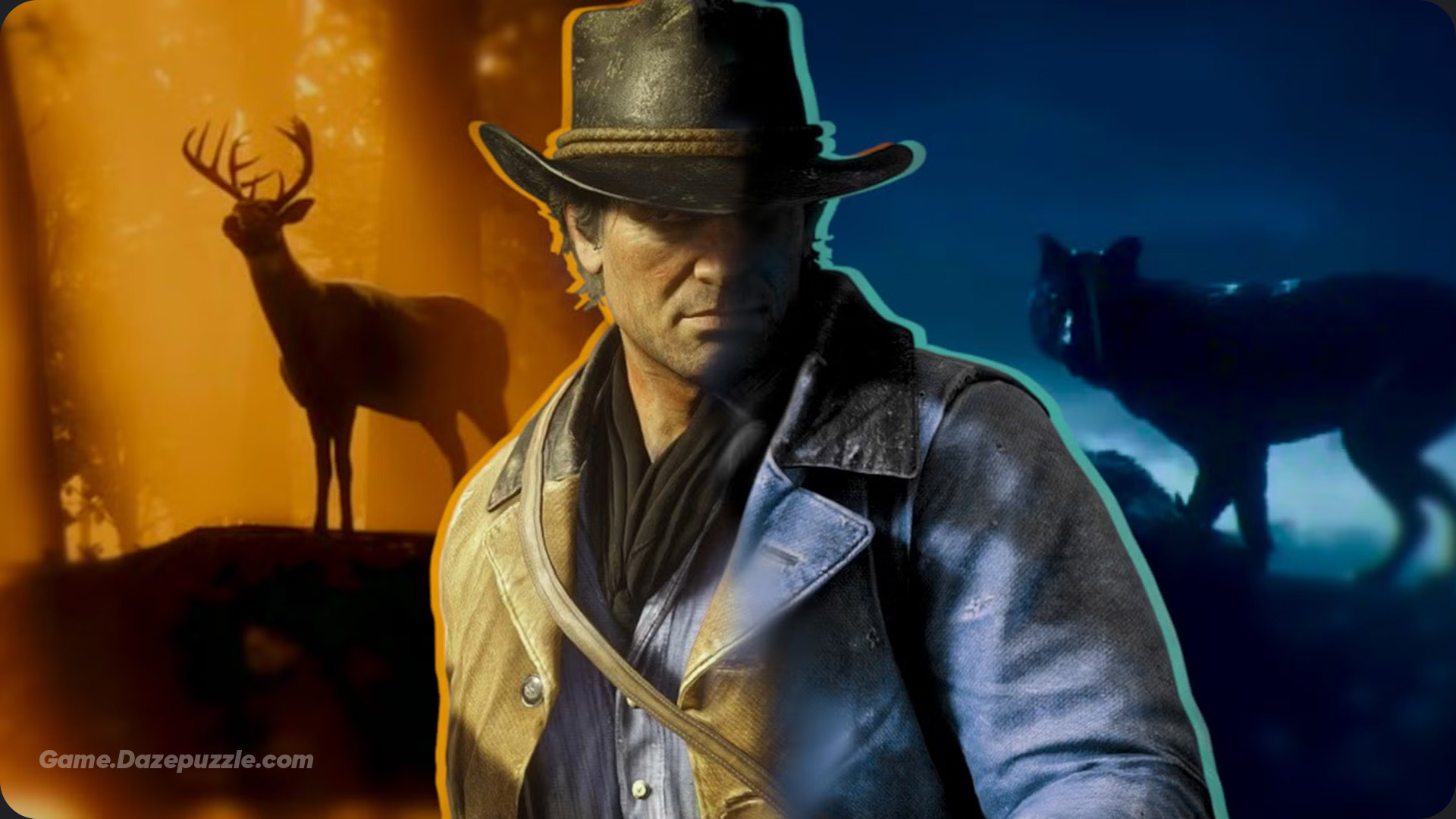
The Spirit Animal: The Stag and the Wolf
Following his diagnosis, Arthur begins to have brief visions of an animal. This animal is a direct reflection of his soul and will be determined by your Honor level. These animals play a great role in RDR2 Endings:
- High Honor: You see a majestic stag, often in a sun drenched forest. The stag is a symbol of nobility, pride and righteousness.
- Low Honor: You see a grim, black wolf lurking in the darkness. The wolf is a symbol of predation, brutality and a life lived by violence.
After Arthur’s death, a final cutscene shows one of these animals. The stag moving towards a sunrise represents a soul redeemed while the wolf retreating into darkness represents a soul damned.
“Thank You”: The Unforgettable Bond with Your Horse
For many players, the most gut wrenching moment of the finale is not only Arthur’s death but also the death of their horse. If you’ve reached the maximum bond level, a special cutscene plays during the final escape. Arthur’s horse is shot and mortally wounded.
The game pauses and Arthur takes a moment to kneel by his dying companion, stroking its head and whispering, “Thank you.” This moment which is forged through dozens of hours of gameplay is a masterclass in interactive storytelling. In fact, this scene demonstrates that your care and choices have profound emotional consequences that transcend the main plot.
Red Dead Redemption 2 Endings: Deconstructing the Epilogue
Just when you think the emotional devastation is over, the game transitions into a massive, two part epilogue. This isn’t just DLC tacked onto the end, it’s a structurally essential part of the narrative that serves to provide closure by bridging the gap to the first game and allow the player to process Arthur’s sacrifice.
RDR2 Endings: Living as John Marston
The epilogue jarringly jumps forward eight years to 1907, with you now in control of John Marston. He lives a quiet life as a ranch hand under an alias. The pacing slows to a crawl. You’re shoveling manure, building fences and learning to be a family man, the life Arthur died to give you.
This mundanity is the entire point. It underscores the profound value of what the gang claimed to be fighting for but could never achieve. By forcing you to live this peace, the game makes Arthur’s sacrifice tangible.
RDR2 Endings: “American Venom”
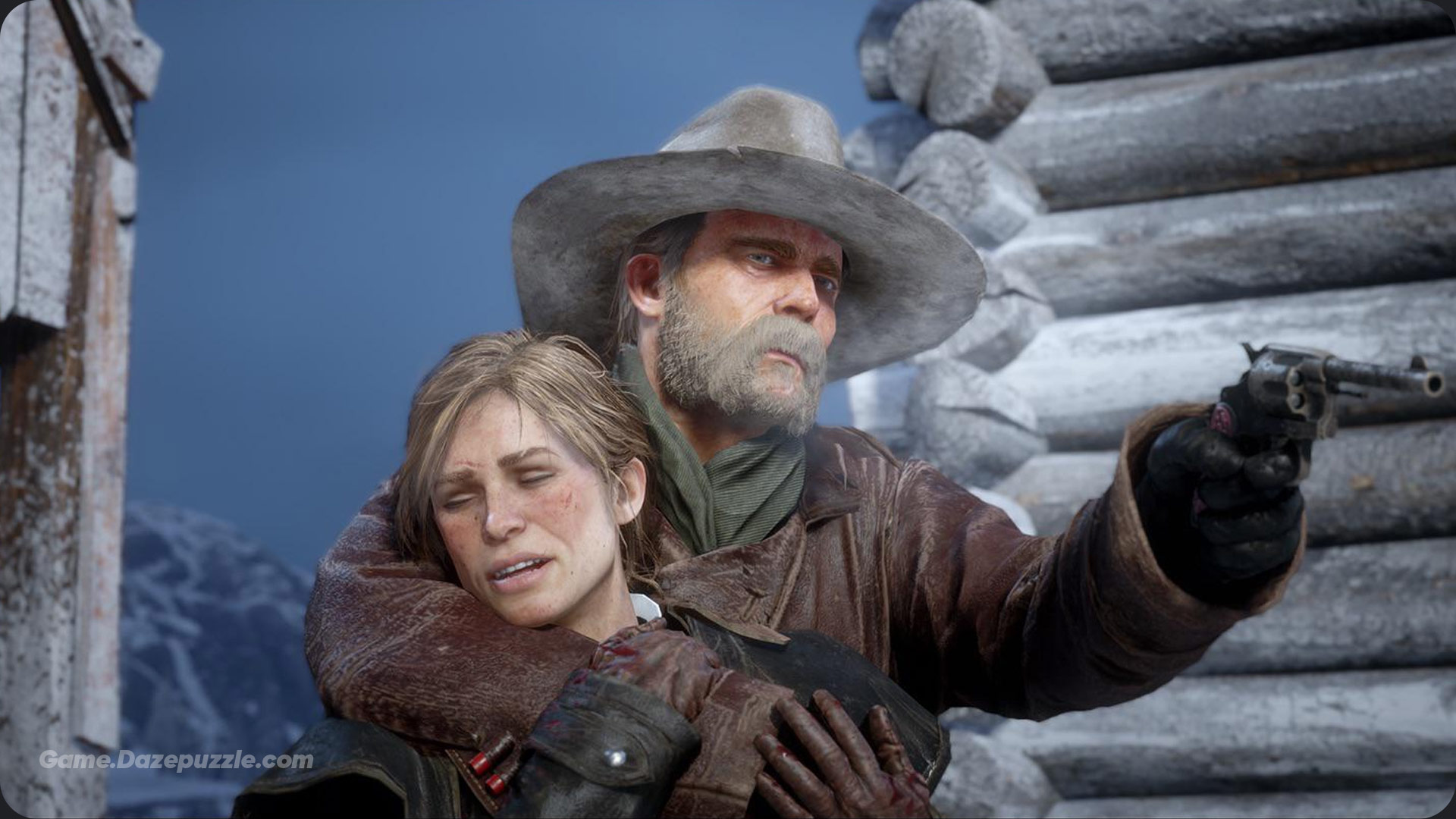
This peaceful existence is eventually shattered when Sadie Adler returns with a lead on Micah Bell’s location. John, along with Sadie and Charles, tracks Micah to Mount Hagen for a final, bloody showdown. The confrontation culminates in a tense three way standoff between John, Micah and a shockingly reappeared Dutch van der Linde.
In a moment of stunning ambiguity, as John pleads with him, Dutch shoots Micah. This allows John to finish him off for good. Dutch’s motivation is left unclear: was it redemption for Arthur, an act of self preservation, or the impulse of a broken man? This ambiguity is crucial, as it perfectly sets up the nihilistic man we see in Red Dead Redemption.
For more information about RDR1 and RDR2 connection, please check our Connection Between RDR2 and RDR1 article.
RDR2 Endings: Setting the Stage for Red Dead Redemption 1
With Micah dead, the epilogue’s final job is to perfectly connect its ending in 1907 to the start of Red Dead Redemption in 1911. It does this through a series of post credits scenes.
We see Bureau of Investigation agents, led by a young Edgar Ross, discover Micah’s body and begin to piece together the trail that will eventually lead them to John Marston at Beecher’s Hope.
The final, haunting shot is of Ross observing John’s ranch from a distance, establishing a powerful sense of dramatic irony. The players are forced to live out the few happy years John has left, knowing the tragedy that awaits him.
Red Dead Redemption 2 Endings: What It All Truly Means
The ending of Red Dead Redemption 2 is the ultimate expression of the game’s central themes which is a melancholic meditation on a changing America, the nature of violence and the possibility of redemption.
The Death of the Outlaw in a Changing World
The collapse of the Van der Linde gang is a microcosm for the end of the Wild West. Set at the turn of the 20th century, the world is rapidly modernizing and there is no room for outlaws and their antiquated ideals. Dutch’s mantra, “We’re thieves in a world that don’t want us no more,” encapsulates this perfectly. Their failure is not just being outgunned by the law. In fact, it’s a moral failure to adapt to a world that has moved on.
The Inescapable Cycle of Violence
The most heartbreaking theme of the saga is that violence begets violence. Arthur’s past is the literal cause of his death; he contracts tuberculosis from a man he beat over a petty debt. His redemption is not for himself, but an attempt to break this cycle for John.
The tragedy is that even his ultimate sacrifice is not enough. John’s decision to hunt down Micah, a clear act of revenge, is what puts him in the Bureau’s crosshairs. This leads directly to the events of the first game and his own death. The cycle continues when his son, Jack, later hunts down and kills Edgar Ross. The legacy of violence is just moved to another generation.

Redemption, Sacrifice, and the Meaning of Loyalty
At its heart, this is a family tragedy. Arthur’s journey is one of disillusionment as he watches his father figure, Dutch, get poisoned by Micah’s influence and his own paranoia. His final plea to Dutch, “I gave you all I had,” is the cry of a son trying to save his father’s soul even when he knows it’s too late.
Arthur’s redemption is found in his ultimate act of loyalty, a loyalty not to Dutch’s failed ideals but to the family he hopes John can build.
RDR2 Endings Explained: A Legacy Forged in Choice
The endings of Red Dead Redemption 2 are a monumental achievement in interactive storytelling. By giving the player true agency over the meaning of Arthur Morgan’s inevitable fate, Rockstar transforms a tragic story into a deeply personal odyssey. You are not just a witness to his end; you are a co author of his legacy.
The epilogue serves as a masterful, melancholic coda, a space to grieve for Arthur and to understand the weight of his sacrifice. It flawlessly bridges the gap to the series’ future while hammering home the saga’s tragic, core themes. The story of Arthur Morgan is a poignant and unforgettable tragedy, a testament to the idea that true redemption may not be about saving yourself, but about giving the next generation a chance at a life you never had.
Red Dead Redemption 2 Steam Page
Thanks for keeping up with Game.Dazepuzzle.com