
Jurassic World Evolution 3 delivers the most impressive prehistoric lineup yet, packing in 91 incredible species that’ll make your inner paleontologist jump for joy. From the bone crushing T-Rex to the ocean dwelling Mosasaurus, this game lets you manage an entire ecosystem of ancient life. The new breeding system adds a whole layer of depth, letting you watch baby dinosaurs grow into adults while inheriting traits from their parents. Whether you’re planning your first park or looking to complete your collection, having all Jurassic World Evolution 3 dinosaurs at your fingertips makes building the ultimate prehistoric paradise way easier. This guide breaks down every single species by habitat type, highlights the newcomers, and gives you the inside scoop on which dinosaurs will keep your guests coming back for more.
What You Will Read in This Article
All Jurassic World Evolution 3 Dinosaurs List
Land Dinosaurs in Jurassic World Evolution 3
| Dinosaur Name | Type | Diet | Special Notes |
|---|---|---|---|
| Acrocanthosaurus | Large Carnivore | Carnivore | Powerful predator with distinctive spine |
| Albertosaurus | Large Carnivore | Carnivore | Smaller relative of T-Rex |
| Allosaurus | Large Carnivore | Carnivore | Classic Jurassic predator |
| Ankylosaurus | Armored Herbivore | Herbivore | Tank like armor and club tail |
| Apatosaurus | Large Herbivore | Herbivore | Long necked gentle giant |
| Archaeornithomimus | Small Omnivore | Omnivore | Fast moving ostrich like dinosaur |
| Atrociraptor | Small Carnivore | Carnivore | Pack hunter from Dominion |
| Baryonyx | Large Carnivore | Piscivore | Tank-like armor and club tail |
| Brachiosaurus | Large Herbivore | Herbivore | Tallest dinosaur in the game |
| Carnotaurus | Large Carnivore | Carnivore | Bull horned predator |
| Ceratosaurus | Medium Carnivore | Carnivore | Horn nosed carnivore |
| Chasmosaurus | Ceratopsian | Herbivore | Frilled herbivore |
| Chungkingosaurus | Stegosaur | Herbivore | Asian stegosaur species |
| Coelophysis | Small Carnivore | Carnivore | Early Triassic predator |
| Compsognathus | Tiny Carnivore | Carnivore | Smallest carnivore, hunts in groups |
| Concavenator* | Medium Carnivore | Carnivore | Distinctive hump backed predator |
| Corythosaurus | Hadrosaur | Herbivore | Crested duck billed dinosaur |
| Deinonychus | Medium Carnivore | Carnivore | Intelligent pack hunter |
| Dilophosaurus | Medium Carnivore | Carnivore | Famous for frill and venom |
| Dimetrodon | Synapsid | Carnivore | Sail backed prehistoric reptile |
| Diplodocus | Large Herbivore | Herbivore | Whip tailed sauropod |
| Dreadnoughtus | Large Herbivore | Herbivore | One of the largest dinosaurs |
| Dryosaurus | Small Herbivore | Herbivore | Swift herbivore |
| Edmontosaurus | Hadrosaur | Herbivore | Large duck billed dinosaur |
| Gallimimus | Ornithomimid | Herbivore | Fast running ostrich dinosaur |
| Giganotosaurus | Large Carnivore | Carnivore | Rival to T-Rex in size |
| Gigantspinosaurus | Stegosaur | Herbivore | Stegosaur with shoulder spikes |
| Guanlong* | Small Carnivore | Carnivore | Early tyrannosaur ancestor |
| Herrerasaurus | Medium Carnivore | Carnivore | One of the earliest dinosaurs |
| Homalocephale | Pachycephalosaur | Herbivore | Dome headed herbivore |
| Iguanodon | Large Herbivore | Herbivore | Thumb spiked herbivore |
| Indominus Rex | Hybrid | Carnivore | Genetically modified super predator |
| Lokiceratops | Ceratopsian | Herbivore | NEW – Uniquely horned ceratopsian |
| Lystrosaurus | Synapsid | Herbivore | Mammal-like reptile |
| Maiasaura | Hadrosaur | Herbivore | Good mother lizard |
| Mamenchisaurus | Large Herbivore | Herbivore | Extremely long necked sauropod |
| Metriacanthosaurus | Medium Carnivore | Carnivore | Mid sized predator |
| Microceratus | Small Herbivore | Herbivore | Tiny ceratopsian |
| Moros Intrepidus | Small Carnivore | Carnivore | Small tyrannosaur relative |
| Muttaburrasaurus | Medium Herbivore | Herbivore | Australian herbivore |
| Nasutoceratops | Ceratopsian | Herbivore | Large nosed ceratopsian |
| Nodosaurus | Armored Herbivore | Herbivore | Heavily armored herbivore |
| Olorotitan | Hadrosaur | Herbivore | Crested hadrosaur |
| Ornithomimus | Ornithomimid | Omnivore | NEW – Bird mimic dinosaur |
| Oviraptor | Small Omnivore | Omnivore | Egg eating dinosaur |
| Pachycephalosaurus | Pachycephalosaur | Herbivore | Thick skulled head butter |
| Parasaurolophus | Hadrosaur | Herbivore | Iconic crested herbivore |
| Patagotitan | Large Herbivore | Herbivore | NEW – Massive titanosaur |
| Proceratosaurus | Small Carnivore | Carnivore | Small crested predator |
| Protoceratops* | Small Herbivore | Herbivore | NEW – Classic small ceratopsian |
| Psittacosaurus | Small Herbivore | Herbivore | NEW – Parrot beaked dinosaur |
| Pyroraptor | Small Carnivore | Carnivore | Feathered raptor |
| Qianzhousaurus | Large Carnivore | Carnivore | Long snouted tyrannosaur |
| Sauropelta | Armored Herbivore | Herbivore | Nodosaur with shoulder spikes |
| Sinoceratops | Ceratopsian | Herbivore | Asian ceratopsian |
| Spinosaurus | Large Carnivore | Piscivore | Largest carnivorous dinosaur |
| Stegosaurus | Stegosaur | Herbivore | Plated dinosaur with spiked tail |
| Struthiomimus | Ornithomimid | Omnivore | Ostrich-like dinosaur |
| Stygimoloch | Pachycephalosaur | Herbivore | Spiked dome headed dinosaur |
| Styracosaurus | Ceratopsian | Herbivore | Spike frilled ceratopsian |
| Suchomimus | Large Carnivore | Piscivore | Crocodile-like spinosaur |
| Therizinosaurus | Therizinosaur | Herbivore | Long clawed herbivore |
| Triceratops | Ceratopsian | Herbivore | Three horned icon |
| Troodon | Small Carnivore | Carnivore | Highly intelligent predator |
| Tsintaosaurus | Hadrosaur | Herbivore | Unicorn crested hadrosaur |
| Tyrannosaurus Rex | Large Carnivore | Carnivore | The king of dinosaurs |
| Utahraptor | Medium Carnivore | Carnivore | Largest raptor species |
| Velociraptor | Small Carnivore | Carnivore | Classic intelligent hunter |
| Yutyrannus | Large Carnivore | Carnivore | Feathered tyrannosaur |
*Deluxe Edition Exclusive
Marine in Jurassic World Evolution 3
| Dinosaur Name | Type | Diet | Special Notes |
|---|---|---|---|
| Attenborosaurus | Marine Reptile | Piscivore | Small plesiosaur |
| Dunkleosteus | Prehistoric Fish | Carnivore | Armored prehistoric fish |
| Ichthyosaurus | Marine Reptile | Piscivore | Dolphin-like marine reptile |
| Kronosaurus | Marine Reptile | Carnivore | Large pliosaur predator |
| Megalodon | Prehistoric Shark | Carnivore | Massive prehistoric shark |
| Mosasaurus | Marine Reptile | Carnivore | Apex ocean predator |
| Plesiosaurus | Marine Reptile | Piscivore | Long necked marine hunter |
Flying in Jurassic World Evolution 3
| Dinosaur Name | Type | Diet | Special Notes |
|---|---|---|---|
| Caiuajara | Pterosaur | Piscivore | NEW – Social colonial pterosaur |
| Dimorphodon | Pterosaur | Piscivore | Small beaked flyer |
| Geosternbergia | Pterosaur | Piscivore | Large crested pteranodon |
| Pteranodon | Pterosaur | Piscivore | Classic toothless flyer |
| Quetzalcoatlus | Pterosaur | Carnivore | Largest flying creature ever |
| Tapejara | Pterosaur | Omnivore | Crested fruit eating pterosaur |
| Thanatosdrakon* | Pterosaur | Carnivore | Large South American predator |
| Tropeognathus | Pterosaur | Piscivore | Fish eating pterosaur |
*Deluxe Edition Exclusive
Hybrid in Jurassic World Evolution 3
| Dinosaur Name | Base Species | Diet | Special Notes |
|---|---|---|---|
| Ankylodocus | Ankylosaurus + Diplodocus | Herbivore | Armored long neck hybrid |
| Indoraptor | Indominus Rex + Velociraptor | Carnivore | Black scaled killing machine |
| Scorpios Rex | Multiple Species | Carnivore | Camp Cretaceous experimental hybrid |
| Spinoceratops | Spinosaurus + Triceratops | Herbivore | Horned spinosaur hybrid |
| Spinoraptor | Spinosaurus + Velociraptor | Carnivore | Agile spinosaur hybrid |
| Stegoceratops | Stegosaurus + Triceratops | Herbivore | Plated ceratopsian hybrid |
Jurassic World Evolution 3 Confirmed Dinosaurs
Jurassic World Evolution 3 launches with an impressive roster of 91 prehistoric creatures, making it the biggest collection in the series yet. Out of these 91 species, 87 are available in the base game, while 4 exclusive dinosaurs are locked behind the Deluxe Edition. The lineup isn’t just about throwing together every dinosaur you can think of though. Frontier Development really thought about variety here, giving you land dwellers, marine monsters, flying reptiles, and even some wild hybrids that definitely didn’t exist in nature.
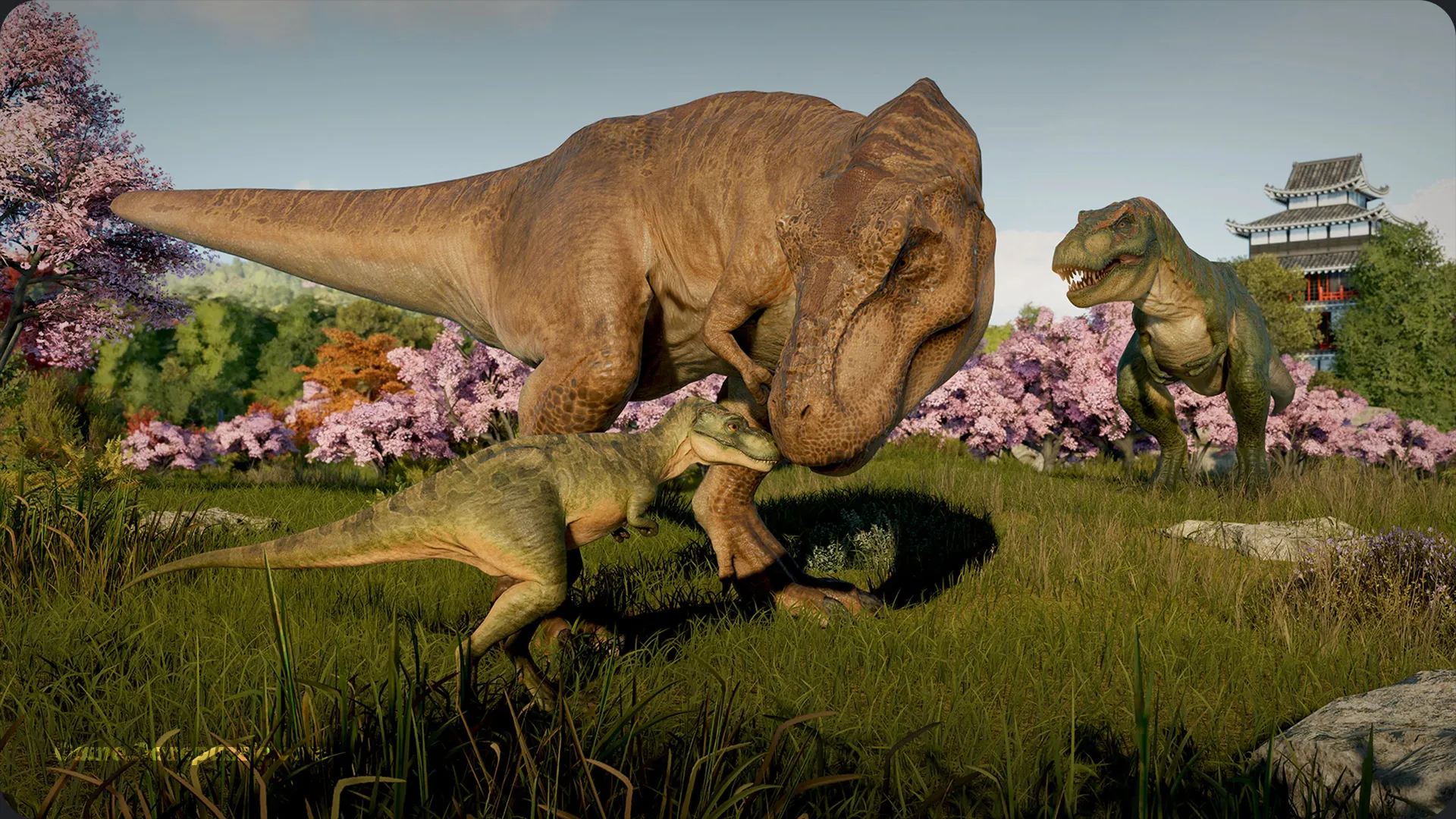
What makes all Jurassic World Evolution 3 dinosaurs more interesting this time around is the new family system. You’re not just hatching full grown adults anymore. The game introduces juveniles that actually grow up, inherit traits from their parents, and develop behaviors based on how you raise them.
Land Species Dinosaurs in Jurassic World Evolution 3
Land dinosaurs make up the bulk of your prehistoric collection, and honestly, that’s where most players will spend their time. These 67 species cover everything from the gentle giants that munch leaves all day to the apex predators that’ll turn your park into a disaster movie if their enclosures fail.
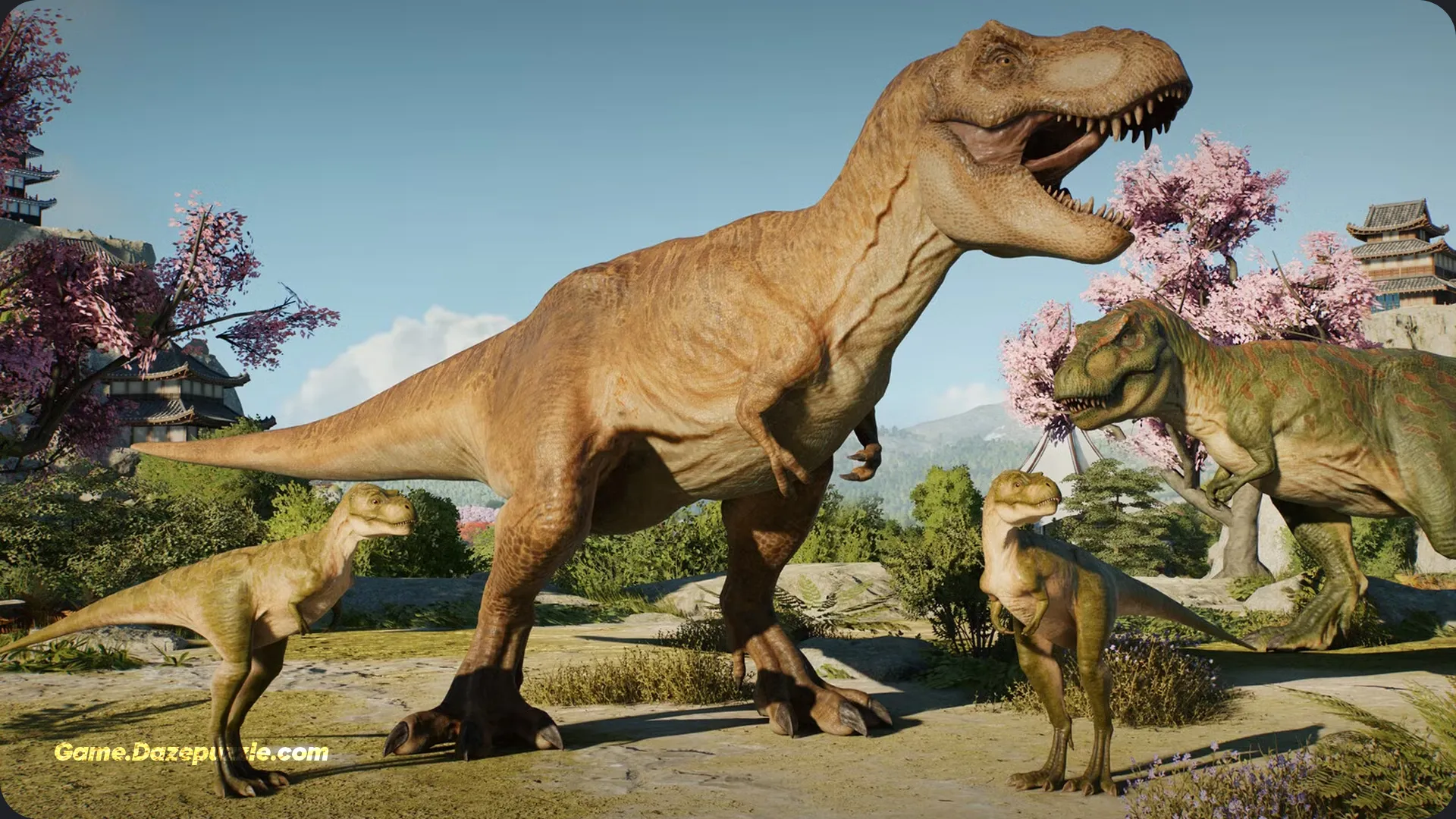
The carnivores steal the show, obviously. Tyrannosaurus Rex remains the undisputed king, drawing massive crowds just by existing. But don’t sleep on Giganotosaurus, which rivals the T-Rex in size and aggression. Spinosaurus brings something different to the table as a semi aquatic fish eater, while pack hunters like Velociraptor, Deinonychus, and the new Atrociraptor work together to take down larger prey.
Herbivores range from the absolutely massive sauropods like Brachiosaurus and Dreadnoughtus down to smaller species like Homalocephale and Microceratus. The ceratopsians are crowd pleasers too, with Triceratops being the obvious favorite, but newcomers like Lokiceratops add unique visual appeal with their distinctive horn arrangements.
Armored dinosaurs like Ankylosaurus and Stegosaurus provide excellent educational exhibits because guests love their unique defensive adaptations. The pachycephalosaurs are entertaining to watch during their head butting dominance displays
Marine Dinosaurs in Jurassic World Evolution 3
The seven marine species in all Jurassic World Evolution 3 dinosaurs might be a smaller category, but they pack serious wow factor. These ocean dwelling creatures need lagoon enclosures instead of traditional paddocks, and building proper aquatic habitats requires different planning than land exhibits. You’ll need to consider depth requirements, feeding stations, and viewing galleries that let guests get up close with these underwater predators without becoming lunch.
Mosasaurus is the flagship marine attraction, and for good reason. This massive marine reptile was the star of Jurassic World’s feeding show, and guests expect to see it in your park. It’s territorial and aggressive, so housing multiple Mosasaurus together is asking for trouble unless you’ve got a seriously massive lagoon. Megalodon brings that prehistoric shark appeal, and watching it patrol your waters never gets old. Both of these apex predators draw huge crowds and justify the expense of building quality aquatic exhibits.
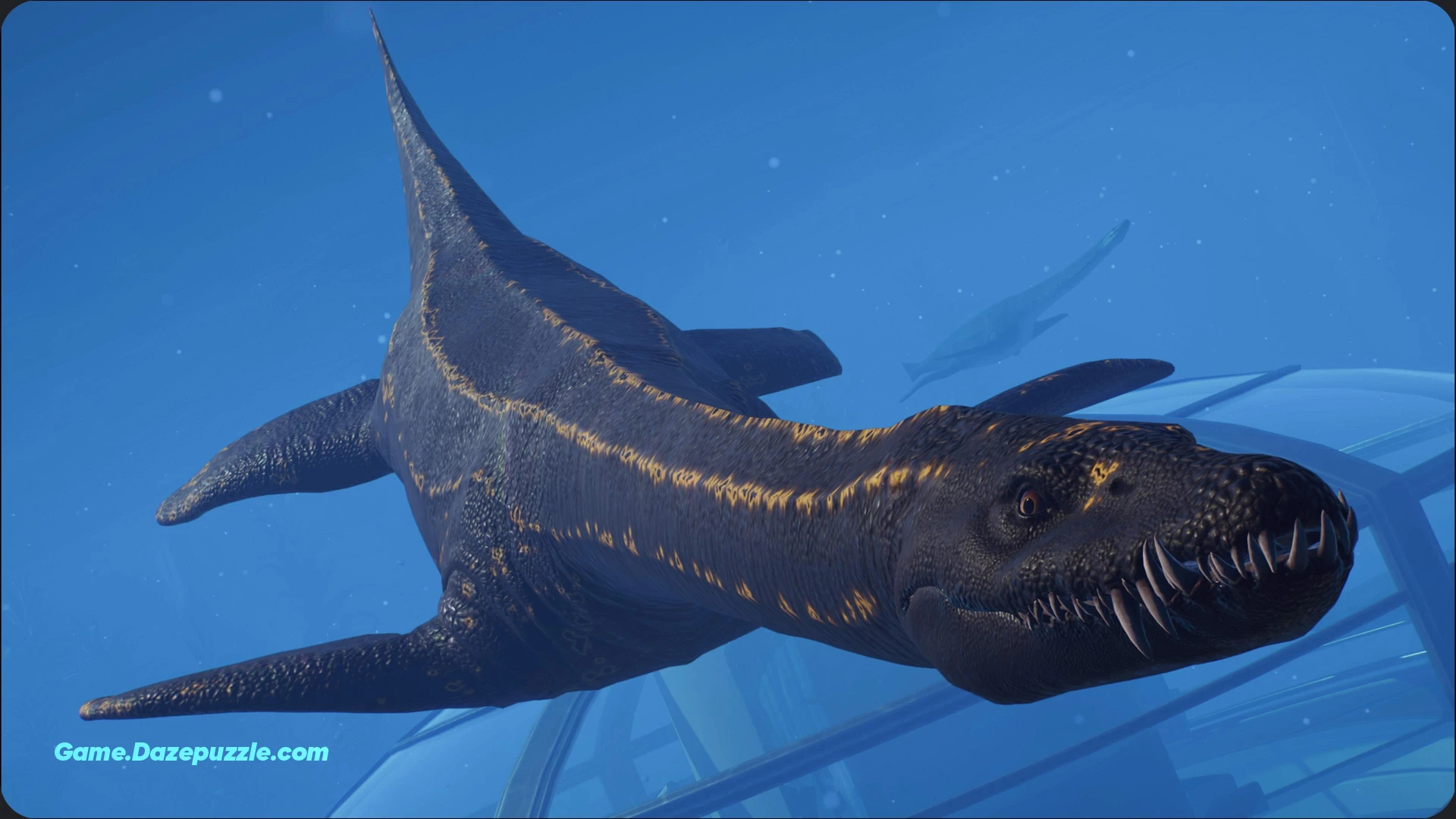
Marine exhibits often become guest favorites because they offer a different viewing experience than land based dinosaurs. The underwater viewing galleries create these dramatic moments where massive predators glide past the glass. Just remember that all Jurassic World Evolution 3 dinosaurs in marine habitats need proper depth, adequate food supply, and enough space to establish territories. Cramming too many large predators into one lagoon is a recipe for disaster, or at least a very expensive vet bill when they start fighting.
Flying Dinosaurs in Jurassic World Evolution 3
Eight flying species make up the aerial division of all Jurassic World Evolution 3 dinosaurs, and they require aviaries instead of standard enclosures. Pterosaurs aren’t technically dinosaurs, but guests don’t care about the scientific classifications. They just want to see giant flying reptiles soaring overhead. Aviaries need adequate height, perching spots, and usually some kind of water feature since most of these creatures are fish-eaters.
Pteranodon is the classic choice, the one everyone recognizes from the movies. It’s relatively easy to manage and does well in groups, making it a solid starter species for your first aviary. Quetzalcoatlus is the showstopper though, being one of the largest flying creatures that ever existed. Its massive wingspan and imposing size make it a must have for any serious park, even though it’s more demanding about space and comfort than smaller pterosaurs.

The new addition Caiuajara brings interesting social dynamics since they’re colonial nesters in real life, and the game reflects that behavior. They actually do better in larger groups, unlike some of the more territorial species. Dimorphodon and Geosternbergia offer good variety without being too difficult to manage. Tapejara adds a pop of color with its distinctive head crest and works well as a fruit-eater if you want some dietary variety in your aviaries.
Hybrid Dinosaurs in Jurassic World Evolution 3
The six hybrid species represent humanity’s questionable decision to play genetic roulette with prehistoric DNA. These aren’t natural creatures, they’re laboratory creations that combine traits from multiple species to create something new and usually dangerous. All Jurassic World Evolution 3 dinosaurs in the hybrid category require special research and higher security measures because they’re generally more aggressive and unpredictable than their natural counterparts.
Indominus Rex is the poster child for why scientists probably shouldn’t mess with dinosaur genetics. This black scaled killing machine combines Tyrannosaurus Rex with Velociraptor and several other species, creating an intelligent, camouflaging super predator that caused absolute mayhem in Jurassic World. It’s expensive to create, difficult to contain, and will absolutely murder everything in sight if it escapes. But guests lose their minds for it, so the risk-reward calculation often works out if you’ve got top-tier security.
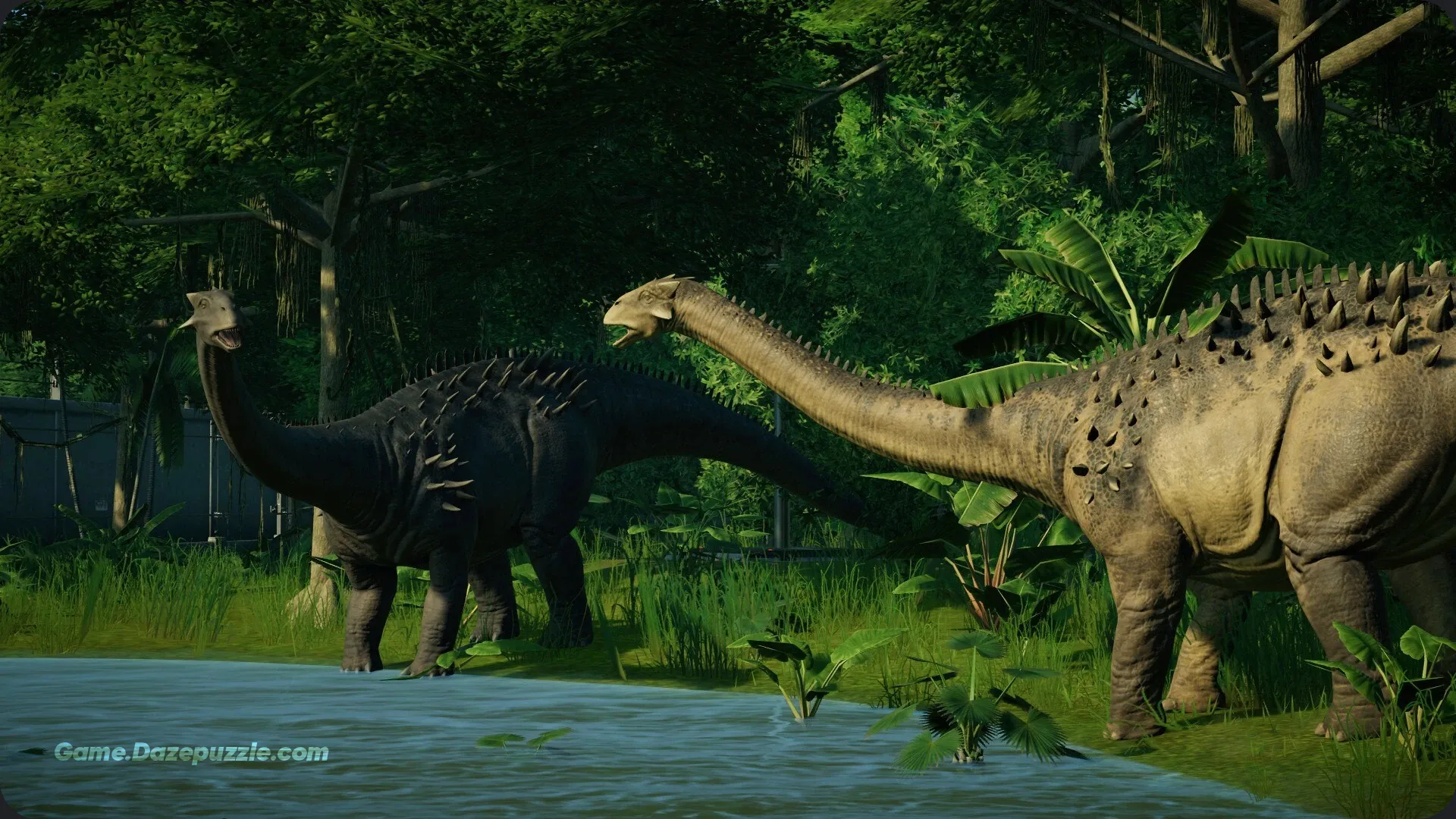
Indoraptor takes the Indominus concept and makes it worse, more compact and even more intelligent. Scorpios Rex represents the experimental phase that came before Indominus, and it shows. This hybrid is twitchy, aggressive, and unstable, but it’s also unique to the Camp Cretaceous storyline, making it a cool addition for fans of that series. The herbivore hybrids are significantly less likely to cause mass casualties.
New Dinosaurs in Jurassic World Evolution 3
Seven brand new species make their debut in all Jurassic World Evolution 3 dinosaurs, and they’re not just throwaway additions. Frontier picked some genuinely interesting creatures that weren’t in the previous two games. These newcomers add fresh variety and give veteran players something new to experiment with, even if they’ve already managed every species from the earlier installments.
Lokiceratops is probably the most visually striking newcomer. This ceratopsian sports a unique arrangement of horns that makes it stand out from the Triceratops and Styracosaurus crowd. It was only discovered recently in real life, so including it shows Frontier’s commitment to staying current with paleontology. Patagotitan brings the size factor as one of the most massive titanosaurs ever discovered, giving you another option for those guests who want to see the biggest of the big.
Psittacosaurus is the little guy of the group, a small herbivore with a distinctive parrot-like beak. It’s not going to draw massive crowds on its own, but it makes a great supporting species in multi dinosaur exhibits. Ornithomimus joins the ostrich dinosaur family alongside Gallimimus and Struthiomimus, adding another fast moving omnivore to your roster. Caiuajara is the only new flyer, bringing colonial nesting behavior to your aviaries.
Jurassic World Evolution 3 Deluxe Edition Dinosaurs
Four species sit behind the Deluxe Edition paywall, and whether that’s worth the upgrade depends on how completionist you are about collecting all Jurassic World Evolution 3 dinosaurs. The base game gives you 87 species, which is plenty for building an incredible park. But those four exclusives add some interesting variety that completionists will definitely want.
Concavenator is a medium sized carnivore with a distinctive hump on its back, making it visually unique among theropods. It’s not game changing in terms of gameplay, but it looks cool and adds another predator option to your roster. Guanlong is one of the new species, representing an early tyrannosaur that’s smaller and less intimidating than its famous descendants. It’s neat from a scientific education standpoint, showing guests the evolutionary path that led to T-Rex.

Protoceratops is another newcomer locked behind the Deluxe Edition. It’s a small ceratopsian that’s historically important because of its famous fossil finds with Velociraptor, but in game it’s basically a cute little herbivore that works well in mixed exhibits. The real standout exclusive is Thanatosdrakon, a large South American pterosaur that adds variety to your flying species. Its name literally means “dragon of death,” which is pretty metal for a fish eating flying reptile.
Best Dinosaurs in Jurassic World Evolution 3
Not all dinosaurs are created equal when it comes to running a successful park. The best species in all Jurassic World Evolution 3 dinosaurs balance several factors including appeal rating, management difficulty, and space requirements. Appeal rating directly impacts how many guests want to see a specific dinosaur, which affects your overall park rating and revenue. Larger, more impressive species naturally score higher, but they also cost more to incubate and maintain.
Tyrannosaurus Rex is non-negotiable. It’s expensive, territorial, and will eat anything that gets too close, but guests expect to see the king of dinosaurs. The T-Rex’s appeal rating justifies the hassle of building a secure, spacious enclosure and dealing with its aggressive personality. Similarly, Brachiosaurus and other massive sauropods draw crowds just by being enormous. Guests love the scale, and these gentle giants are relatively easy to keep happy since they’re herbivores. They need space though, so plan accordingly.
Triceratops hits the sweet spot of being iconic, visually interesting, and manageable. It’s got solid appeal, works well in small herds, and doesn’t require the intense security measures of large predators. Velociraptors are guest favorites thanks to the movies, and while they’re more dangerous than herbivores, they’re smaller and easier to contain than T-Rex. Their pack hunting behavior is entertaining to watch, adding educational value.
Breeding and Juvenile Dinosaurs
The breeding system is what really sets all Jurassic World Evolution 3 dinosaurs apart from previous games. Instead of just hatching fully grown adults from your Hammond Creation Lab, you can now establish actual breeding programs where dinosaurs reproduce naturally and raise their young. Juveniles start small and gradually grow into adults, inheriting traits from their parents along the way.
Trait inheritance is the core mechanic here. When two dinosaurs breed, their offspring can pick up genetic traits from either parent. These traits affect everything from temperament and social needs to resilience and lifespan. If you’ve carefully gene modified your parent dinosaurs to have desirable traits, you can pass those improvements to the next generation without spending resources on modifying each individual. It’s basically selective breeding, letting you gradually improve your dinosaur stock over time.
The juvenile stage is where things get interesting. Baby dinosaurs need high comfort levels during their early development, and how well you maintain their environment directly shapes what kind of adult they become. Stressed juveniles develop into more aggressive, harder to manage adults. Well cared for babies grow into calmer, more resilient dinosaurs. This creates an actual incentive to build quality enclosures and maintain proper conditions rather than just meeting minimum requirements.

When planning your park, remember that all Jurassic World Evolution 3 dinosaurs have specific compatibility requirements. Large carnivores are almost always solitary and territorial. Herbivores generally do better in herds, though herd size requirements vary by species. Small carnivores often hunt in packs and need multiple individuals to thrive. Marine predators need serious space and don’t mix well with each other unless you’ve got massive lagoons.
The breeding system means you can start with a basic collection and gradually expand through natural reproduction rather than constantly incubating new dinosaurs. Focus on establishing stable populations of high appeal species first, then fill out your roster with supporting cast members. Mix habitat types across your park so guests encounter different species as they explore, and always build appropriate viewing platforms because the coolest dinosaur in the world doesn’t help your rating if guests can’t see it properly.
Jurassic World Evolution 3 Steam Page
Thanks for Staying with Game.Dazepuzzle